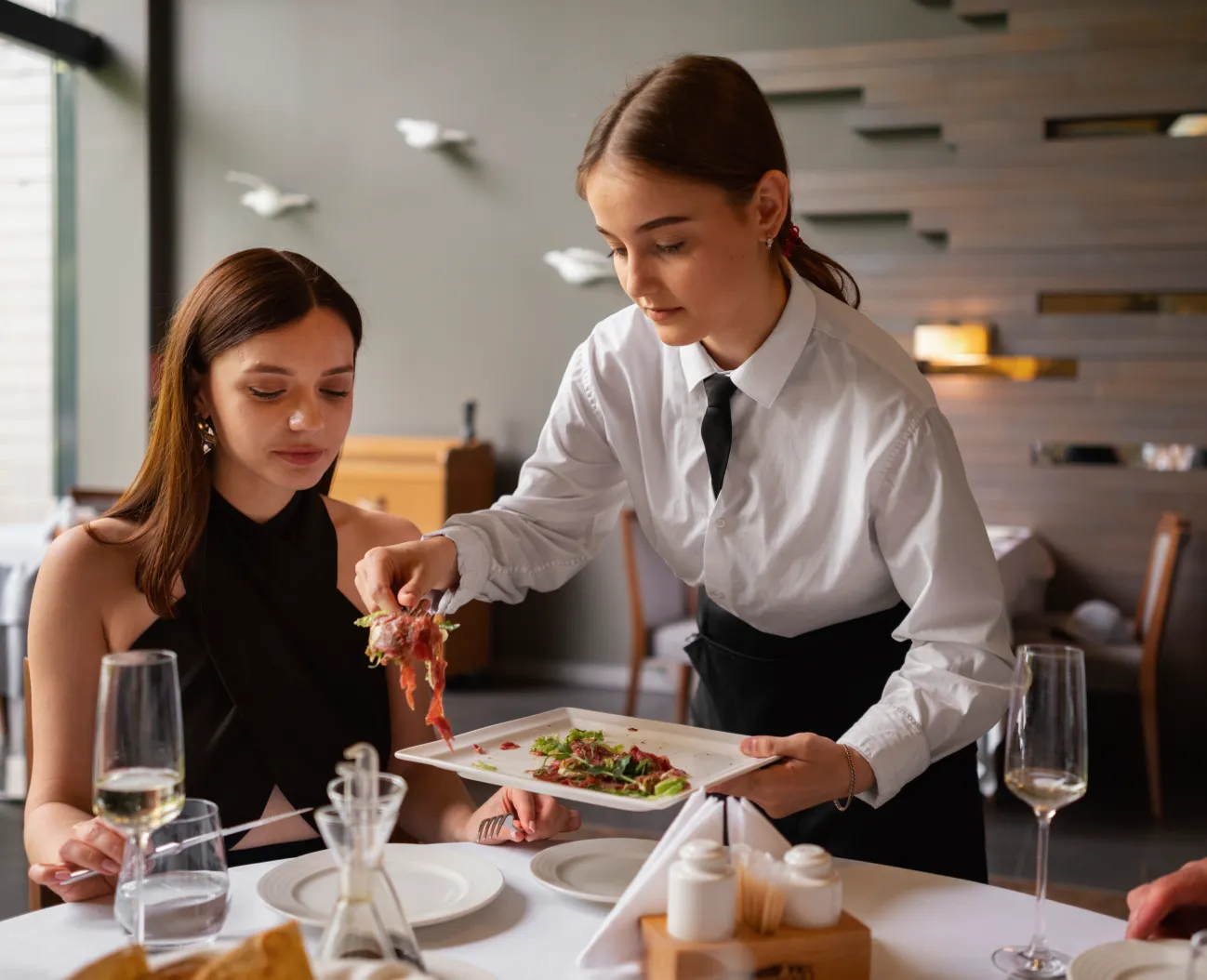
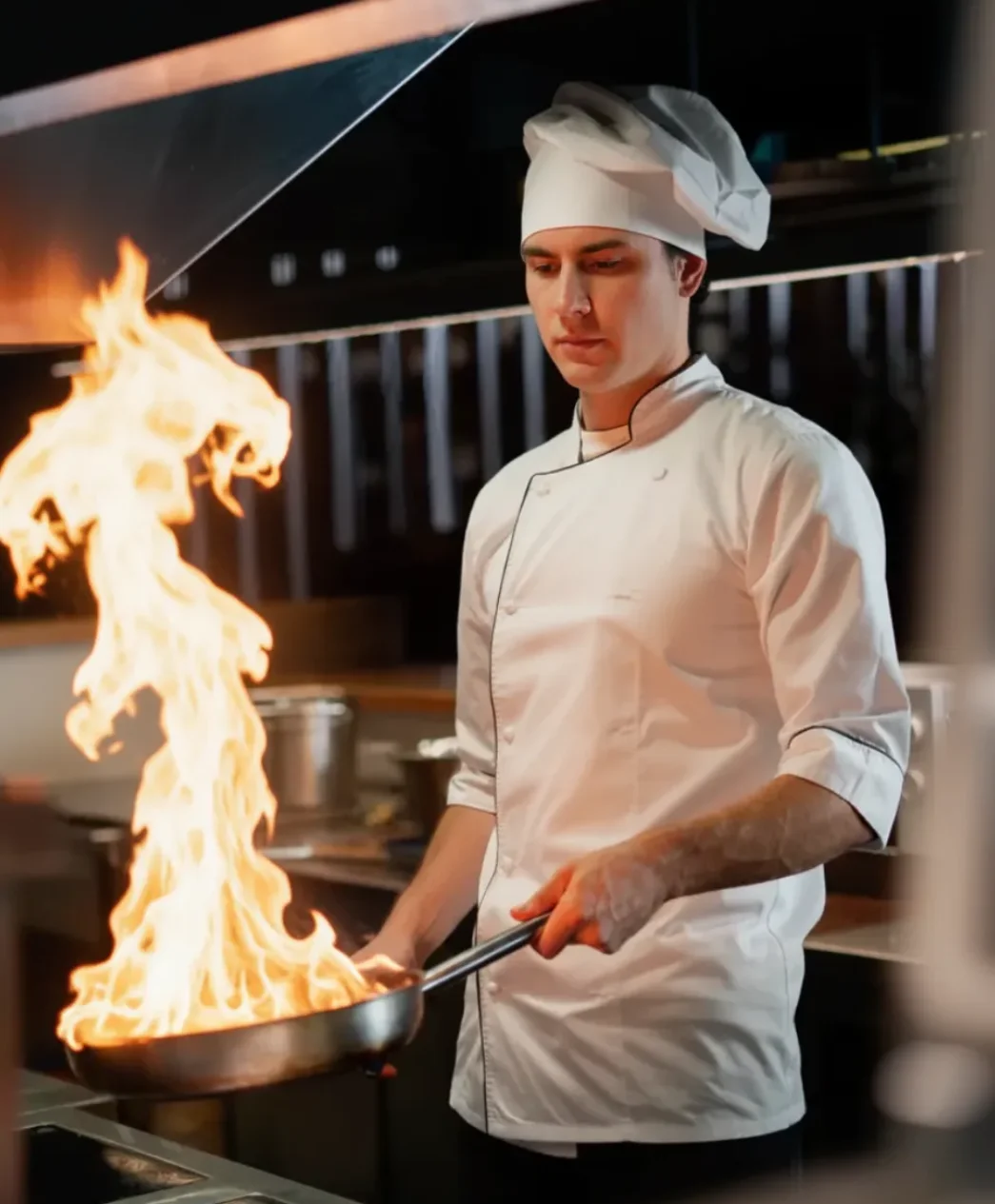
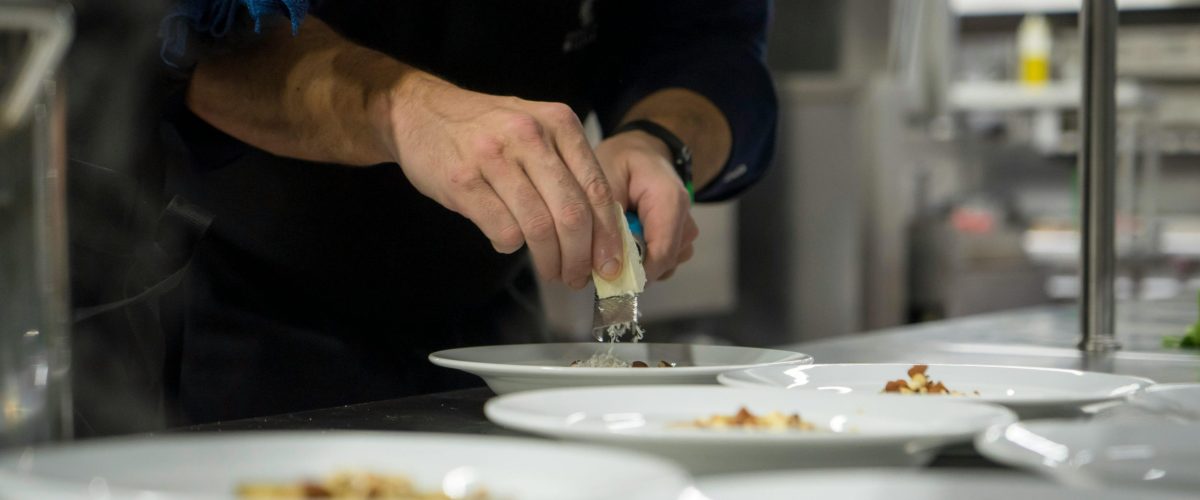
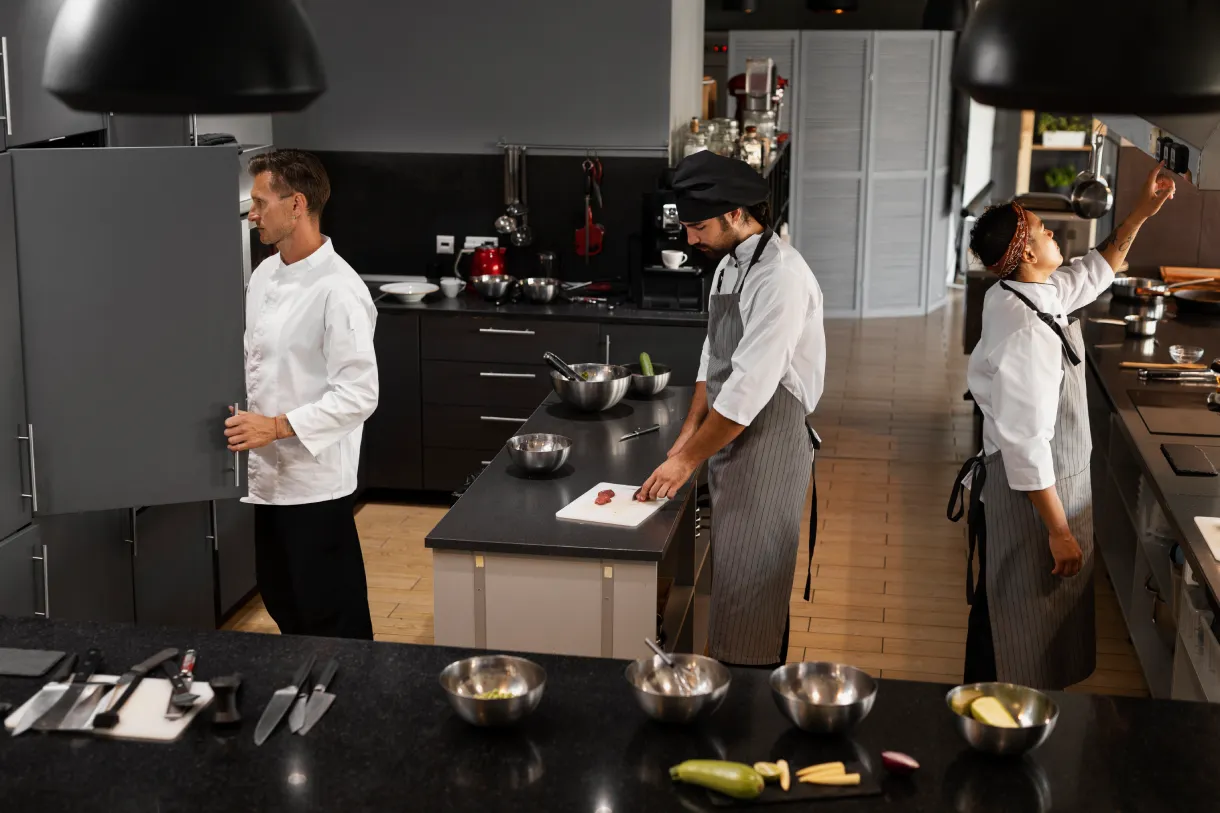
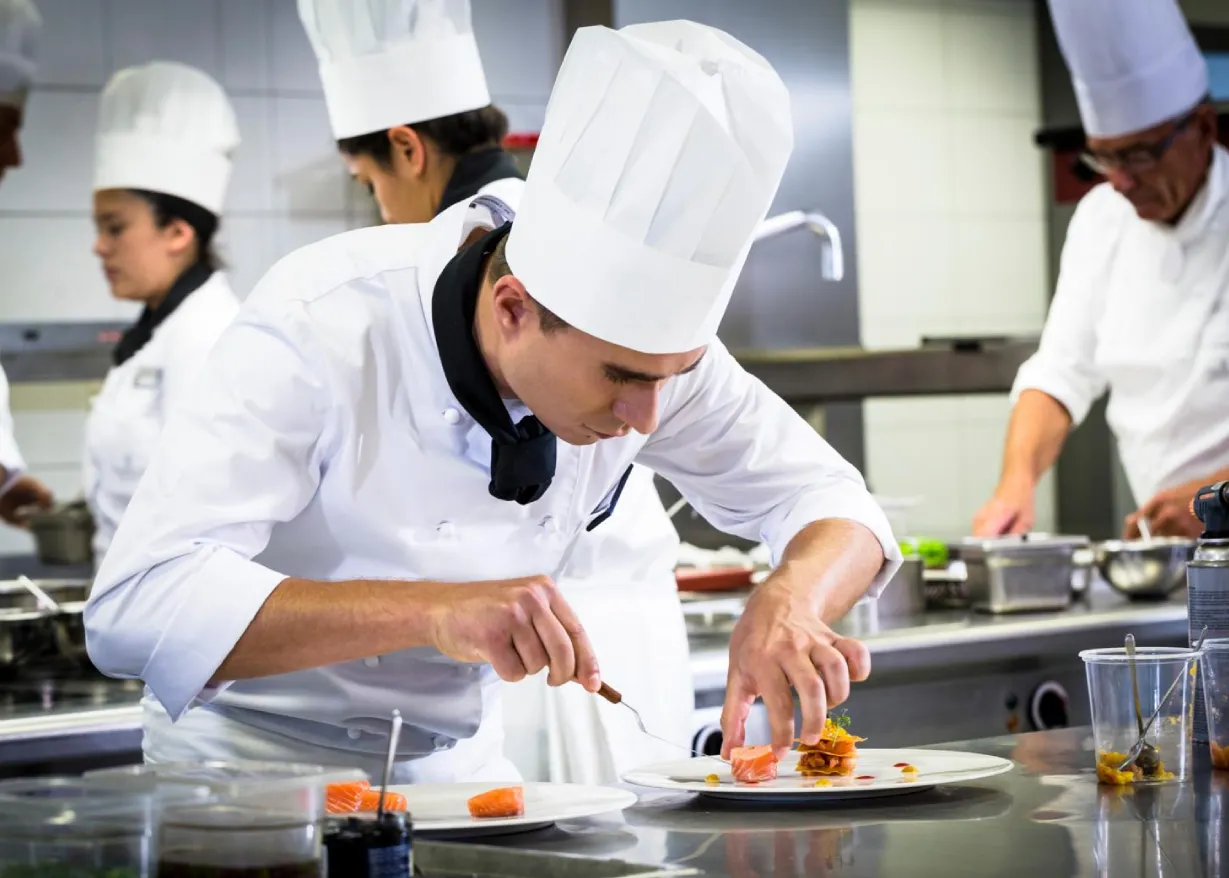
MJ Signature International Centre for Hospitality and Culinary Arts offers an exceptional platform for aspiring chefs to turn their passion into a global career. Our world-class facilities feature advanced training kitchens and modern learning spaces that create a truly professional environment. Students are immersed in hands-on sessions that strengthen both their creativity and technical expertise.
Every learner is mentored by seasoned chefs and industry professionals who bring real-world experience and personalized guidance to the classroom. Their mentorship ensures each student develops confidence, precision, and a deep understanding of culinary artistry.
All our programs are internationally certified by City & Guilds, UK, ensuring global recognition and credibility for every qualification earned here. This affiliation reflects our commitment to maintaining the highest educational standards and meeting global hospitality benchmarks.
Students also gain international exposure through a 6-month paid internship at prestigious 5-star properties in India and across Dubai, Abu Dhabi, Qatar, and other leading destinations. With dedicated career support and 100% placement assistance, graduates step confidently into rewarding roles in top culinary establishments worldwide.
Our vision, mission, and leadership reflect our unwavering commitment to shaping future-ready professionals through world-class education, innovation, and industry expertise.
To create an inclusive and innovative learning environment that empowers students to become creative, thoughtful professionals in the global hospitality and culinary industry.
Our mission is to empower students through world-class, hands-on training that blends passion, skill, and knowledge for global hospitality and culinary success.
We provide world-class, hands-on training to develop skilled, confident, and creative professionals ready to lead successfully in the global culinary and hospitality industry.
The City and Guilds of London Institute (City & Guilds) is a reputed vocational education institution in the United Kingdom with a heritage of more than 100 years of excellent vocational education. It provides more than 500 qualifications in 110 sectors of various industries. They have extended their quality education in India in association with The Manipal Global Education Services to provide international exposure to Indian students in the form of IVQ qualifications.
International Vocational Qualification (IVQ) stands for short-term certificate courses that allow students to gain knowledge equivalent to regular courses in a shorter span of time. These courses are more inclined towards industry-oriented skill training, and they help students learn skills from a professional perspective. The present global scenario of skill training highly recommends IVQs due to their efficiency in making students skill-trained in lesser time and their worldwide recognition.
“As Managing Director of MJ Signature International, I am delighted to extend a warm welcome to our esteemed institution, renowned for its unwavering commitment to culinary innovation and academic excellence. Our institution is a crucible where aspiring chefs, patissiers, and culinary professionals converge to hone their craft, push boundaries, and redefine the culinary landscape.
At MJ Signature International, we pride ourselves on fostering a culture of creativity, experimentation, and inclusivity, where students can explore the rich tapestry of global cuisines and develop the acumen, dexterity, and vision required to succeed in this dynamic industry. Our distinguished faculty, cutting-edge facilities, and extensive industry partnerships provide an unparalleled environment for students to flourish.
I invite you to embark on this gastronomic odyssey with us, where tradition meets innovation and passion meets precision. Together, let us shape the future of gastronomy and create a culinary legacy that is as enduring as it is sublime.”
Warm regards,
Midhun Jose Antony
Managing Director
MJ Signature International Centre for Hospitality and Culinary Arts.


The culinary world has indeed evolved into a sophisticated art form that blends creativity, technique, precision, and business acumen. A diploma in culinary arts is a strategic pathway to turn passion into a rewarding career. This guide covers curriculum details, career prospects, and choosing the right educational pathway for your culinary aspirations, helping you make informed decisions about your future in this dynamic industry.
Culinary arts is a multifaceted field that transcends mere cooking skills, encompassing food science, nutrition, business acumen, creativity, and cultural sensitivity. It demands a unique blend of artistic flair, scientific knowledge, and entrepreneurial spirit, preparing individuals for the complexities of modern kitchens. With specializations ranging from classical French cuisine to molecular gastronomy, students can hone their skills in various areas, including regional Indian cooking, pastry arts, and sustainable practices. A comprehensive culinary education equips professionals with a broad skill set, including food safety regulations, cost control, menu engineering, and team leadership, making them versatile assets in the industry. This expertise opens doors to diverse opportunities in traditional restaurants, food technology companies, cruise lines, and media production, empowering graduates to thrive in an ever-evolving culinary landscape.
A Diploma in Culinary Arts is a comprehensive and intensive program that equips students with professional cooking techniques, kitchen management skills, food safety protocols, and hospitality operations knowledge, preparing them for immediate employment in professional kitchens. This practical-heavy program, lasting 6–12 months, combines theoretical foundations with extensive hands-on training in commercial kitchens, enabling graduates to meet industry standards and thrive in fast-paced restaurant environments.
Internationally recognized certifications enhance graduate employability and provide credibility with employers worldwide. Programs affiliated with respected organizations like City & Guilds, UK, American Culinary Federation, or national hospitality boards typically maintain higher educational standards.
Unlock the Secrets of Professional Cooking!
This diploma in culinary arts covers current industry practices, emerging trends, and technologies used in modern food service operations.
KNIFE MASTERY:
HEAT & SIZZLE:
SAUCE MAGIC:
Explore the Flavors of the World!
Comprehensive culinary programs take students on a gastronomic journey around the world, exploring diverse traditions and flavors. Indian cuisine modules cover regional specialties, spice blends, and traditional cooking methods from North, South, East, and West India. International cuisine exposure includes Continental European techniques, Mediterranean flavors, Asian cooking methods, and fusion concepts. Students learn to adapt techniques across cuisines, respecting cultural significance and traditional approaches while exploring contemporary trends and molecular gastronomy. This broadens their culinary perspective, preparing them for innovative kitchen environments and creative menu development opportunities.
Professional kitchens operate under strict safety and hygiene standards, and students learn Hazard Analysis and Critical Control Points (HACCP) principles, proper food storage techniques, temperature control protocols, and contamination prevention methods. Personal hygiene standards, uniform requirements, and professional behavior expectations are emphasized throughout training. Additionally, students learn allergen management, identifying common allergens, preventing cross-contamination, and modifying recipes to accommodate dietary needs, including vegan, gluten-free, and religious restrictions, ensuring safe and inclusive dining experiences.
Business and management are crucial components of culinary education, covering menu planning, recipe costing, inventory management, and staff management. Students learn to create profitable menus, manage suppliers, and reduce waste, directly impacting restaurant profitability. Leadership skills, delegation, and communication protocols prepare graduates for supervisory and management positions. Understanding kitchen hierarchy, service coordination, and quality control systems ensures smooth operations during high-pressure service periods. Time management and organization skills are developed through practical exercises, enabling students to manage multiple dishes while maintaining quality standards and meeting service deadlines.
Practical training is a crucial part of culinary education, providing hands-on experience in professional kitchen settings. Students work with commercial-grade equipment, developing skills and stamina needed for real-world kitchens. Through simulated service environments and live production, they learn to prepare meals under pressure, manage time, and maintain quality standards. Key aspects of practical training include working with commercial equipment, menu execution, live production and service, and revenue generation and cost control. Students gain experience in customer service, order management, and handling challenges. This hands-on experience helps develop essential skills like communication, stress management, and quality consistency.
Students participate in simulated service environments, preparing meals under time pressure while maintaining quality and safety standards. They also gain real-world experience through student-run restaurants, cafeterias, or catering services. This experience helps students develop physical stamina, mental focus, and multitasking abilities required for professional kitchen work.
International hotel chains, cruise lines, and resort properties actively recruit trained culinary professionals for positions worldwide. Quality diploma credentials facilitate work visa applications and international employment opportunities.
Cultural exchange programs and international internships provide pathways for graduates to gain global experience while building international professional networks.
Food tourism and experiential dining create opportunities for creative professionals who can combine culinary skills with entertainment, education, and cultural interpretation abilities.
Culinary graduates can pursue various career paths, including hotel and restaurant careers, specialized culinary roles, and food service management. These roles include positions in luxury 5-star hotels, fine dining restaurants, casual dining establishments, and quick-service operations. Specialized roles include pastry chef, banquet chef, private chef, cruise line chef, and corporate dining management. Food service management roles include kitchen supervisor, food and beverage director, quality assurance manager, and menu development specialist. Career progression can lead to senior roles like executive chef, sous chef, and food service director.
Culinary graduates can turn their passion into a business, exploring various entrepreneurial ventures. They can establish traditional restaurants, food trucks, catering companies, specialty food production units, or online food delivery services. The rise of food delivery platforms has made home-based businesses and cloud kitchens a viable option, requiring minimal initial investment. As they grow, they can expand their customer base and explore consulting opportunities, helping new restaurants with menu development, kitchen design, staff training, and operational optimization.
Food blogging, social media influencing, cookbook writing, and TV appearances for those with charisma and communication skills.
Culinary instruction in schools, corporate training, and private cooking classes for sharing expertise.
Product development, quality control, and consumer testing roles in food companies, leveraging technical knowledge and culinary sensibility.
Health-conscious dining trends create opportunities for professionals specializing in nutritious, allergen-free, or diet-specific menu development. Understanding nutrition science and dietary restrictions becomes increasingly valuable.
Sustainable cooking practices and farm-to-table concepts require knowledge of local sourcing, seasonal menu planning, and environmental impact reduction that sophisticated consumers increasingly demand.
Technology integration in food service operations creates needs for professionals who understand both culinary arts and digital systems used for ordering, inventory management, and customer engagement.
To succeed in culinary school and beyond, focus on maximizing your educational experience. Actively participate in practical sessions, volunteer at events, and practice outside class to develop skills and show commitment. Build relationships with peers, instructors, and industry pros to create valuable networks. Develop a portfolio of your work, including photos, recipes, and achievements, to showcase your talents.
For ongoing professional development, prioritize continuous learning through workshops, competitions, and industry publications. Join professional associations for networking, education, and recognition. Specialize in a specific cuisine or technique to stand out in the market.
A diploma in culinary arts is a gateway to a creative and fulfilling career with endless opportunities for growth and innovation. The comprehensive education, hands-on experience, and industry connections provided by quality programs lay the foundation for success in the dynamic food service industry. With dedication, continuous learning, and passion, you can turn your culinary dreams into reality – whether it’s working in luxury hotels, opening your own restaurant, or pursuing a career in culinary media. The investment in professional training pays off in the form of enhanced earning potential, career advancement, and the satisfaction of crafting exceptional food experiences that bring joy to others.
A diploma in culinary arts is a comprehensive professional training program that covers a wide range of topics, including advanced cooking techniques, food safety protocols, kitchen management, regional cuisines, pastry fundamentals, cost control, and extensive hands-on practical experience in commercial kitchen environments. This program equips students with the skills and knowledge needed to succeed in the culinary industry, preparing them for careers in restaurants, hotels, and other food service establishments.
Most programs require 10th or 12th standard completion from recognized educational boards, basic English communication proficiency, age above 16 years, genuine passion for cooking, physical fitness for demanding kitchen work, and strong willingness to learn professional culinary techniques and safety protocols.
Graduates can work as line cooks, sous chefs, pastry chefs, restaurant managers, catering coordinators, food stylists, culinary instructors, or start their own successful restaurants, artisan bakeries, specialized catering businesses, or innovative modern food delivery services.
Students develop advanced knife skills, cooking techniques, comprehensive food safety knowledge, menu planning, cost control, time management, teamwork, creativity, problem-solving abilities, kitchen management, customer service, and professional communication skills essential for sustainable long-term culinary success.
Learn from accomplished chefs, educators, and industry leaders dedicated to shaping your future with real-world knowledge and global insights.

Manager

College Principal

Department Head

MJ Signature International is a premier institute offering world-class training and global opportunities in culinary arts and hospitality education.
Copyright © 2025 MJ Signature International. All Rights Reserved
Don't have an account? Register Now